Are Praying Mantis Endangered
The Praying Mantis is not at risk of extinction. Praying mantises are thought by some to be in peril of death. Read on to find out if the stories are true and how to safely remove a praying mantis if you ever come across one in your house.
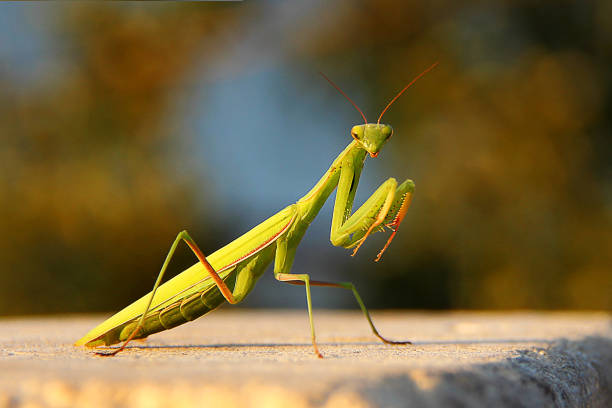
No, there are no poisonous or poisonous praying mantises. If bitten by a praying mantis, it will not introduce any poison or harmful bacteria that could harm it. And if you accidentally ingest a praying mantis, it doesn’t contain any poison that could make you sick.
Praying mantises can kill birds all over the world and eat their brains. A praying mantis (Mantis Religiosa) eats a black-chinned hummingbird (Archilochus alexandri) in Millwood, Colorado. In some cultures, this creature is considered a talisman for good luck. Long ago, the French believed the praying Mantis would bring lost children home.
If I remember correctly, killing a praying mantis in New Jersey was illegal. No (and never has been) federal or state law prohibits the killing of praying Mantis. These are beneficial insects that are best left alone as they will eat many other insects that they think are pests but are not endangered species.
If you feel they are doing more harm than helping your garden, getting rid of the praying Mantis is a logical choice. Put on thick gloves and grab the praying Mantis. Try lifting it from behind, so the front legs and mouth are in front of your hands. Praying mantises have strong, sharp front legs, and their bite is painful.
 Why are praying Mantis considered a beneficial insect?
Gardeners have long considered the praying Mantis a beneficial insect because it feeds on many other insects, destroying crops and reducing the need for pesticides.
Of course, the more giant the insect, the more damage it can do due to self-defence. However, receiving a praying mantis bite is not very common and does not pose a significant risk. These insects are not poisonous and do not transmit disease through bites, so there is nothing to worry about.
If you read the previous section carefully, you will discover that the praying Mantis is not a potentially dangerous insect. While he can sometimes bite or scratch his paws with blades, it’s not much of a risk. So much so that they are used in some gardens as a natural mechanism to control other pests.
Gloves can minimize this possibility. Place the praying Mantis in a box and cover it. Make ventilation holes in the box’s lid, so they are not large enough for the praying Mantis to escape. Move the praying Mantis. While you may not want a praying mantis in your yard, it is generally beneficial.
There is no specific host plant for the praying Mantis. Many praying Mantis in the garden is not a big problem. Yes, they can get in the way. The praying Mantis, not to mention captives, will likely feed on pollen from flowering plants. Praying mantises are known to spend a reasonable amount of time on flowers, eating pollen and preying on their primary prey, such as flies or bees. Flowering plants often attract many flying insects.
killing technique of Mantis
In the killing technique, the victim is impaled and held in place with a single to the front legs while the victim is pressed hard against the body of the praying Mantis. Sometimes the attempt fails, and the praying Mantis has to resort to a more direct approach. They say that this insect’s beak cuts and tears its victim’s body.
(Tenodera Sinensis) Egg cartons are attached to branches, leaves, fences, etc. Several cartons can be left until the cold winter finally arrives—this new generation of praying mantis hatch when the warm weather returns to repeat the process.
How to get rid of a praying mantis 1 Put on thick gloves and pick up the praying Mantis. 2 Place the praying Mantis in the box and cover it with the lid. Move the praying Mantis. While you may not want praying Mantis in your yard, they are generally helpful. 4 If you like, kill the praying Mantis.
Summary
When they sense the presence of people, they tend to disappear quickly or disguise themselves properly. With direct contact, the praying Mantis is unlikely to bite a person. Each season, a generation of praying mantises develops in Ohio. Mantis Release for Biological Control Mantis egg cartons are marketed as a natural pest control method and can be purchased for garden release.
 Enemies of Praying Mantis
| 1 | Other insects. |
| 2 | Only a few insects allow the praying Mantis to be careful. |
| 3 | Sky. |
| 4 | The praying Mantis sits on plants for most of the day, waiting for butterflies and other insects to land on the closest flower on the menu. |
| 5 | In the background. |
| 6 | Two-legged enemy. |
Praying mantises have strong, sharp front legs, and their bite is painful. While they cannot kill humans and have no venom, they can hurt you with their powerful front paws and edges. Gloves can minimize this possibility.
In any case, praying mantises are at greater risk to them than to them. So not only is the praying Mantis not poisonous, but it also does not spit. Therefore, the answer to this question is that the praying Mantis cannot spit poison at you, no matter what they tell you.
Probably the most well-known beneficial insect, the praying Mantis (Tenodera aridifolia Sinensis), gets its name from two thick front legs covered with spines to grab prey. It quickly infects and eats almost any insect, good or bad, including caterpillars, grasshoppers, crickets, wasps and bees.
Do praying mantis poison humans’ symptoms
The praying mantis bite but are not as painful as many other insects. A potent venom from a praying mantis bite can cause people to experience a burning sensation with milder symptoms, such as swelling around the wound. The lifespan of a praying mantis varies widely between species.
Fortunately, praying mantises are not poisonous at all, and they are not. The praying Mantis is unlikely to bite you, but if it bites you, even if it hurts, it will not introduce any irritants into your system. Once the male completes his mating dance, the female praying Mantis bites the male’s head or legs during or shortly after mating. However, it should be noted that this trait is not typical of praying Mantis.
Since praying mantises are not poisonous, you do not need to do anything. There are several ways to protect yourself from a possible praying mantis bite. When gardening, it is better to wear gloves. Also, wear long pants and socks in the woods or on tall grass.
 Frequently Asked Questions - FAQs
Following are the most common questions about praying Mantis:
Is it OK to pick up a praying mantis?
Although the praying Mantis is harmless to humans, it should not be approached this way. This ultimately puts a lot of pressure on the praying mantises and can even lead them to attack with defensive intent. Praying mantises can also die from excessive stress. Therefore, collecting samples from the wild is not practical.
Do praying mantis poison humans’ skin
In general, the praying Mantis is not dangerous to humans. The only real threat from a praying mantis is a small bite that probably won’t even damage your skin, that’s all! Their effective hunting/killing strategies only work on their natural prey, not humans. So don’t worry if you come across a praying mantis!
Why does a praying mantis bite its head off?
And thanks to their excellent vision, they can see movements up to 18 meters away. Eating prey isn’t all praying mantises cook. Females sometimes bite the male’s head after mating. This will give you the nutrients you need to lay eggs.
Where can a praying mantis be found in the world?
Praying mantises can be found almost everywhere, from forests to deserts. These insects have long bodies, 2 to 5 inches long, depending on the species, usually green or brown.
Do praying mantis poison humans causes
Although the praying mantis bites when provoked, its edges are non-venomous and do not cause much harm to humans. What if a praying mantis spits in your eye? This belief may stem from the idea that the praying Mantis can spit poison at you, but this is not true.
What are the natural predators of praying Mantis?
The main predators of the praying Mantis are frogs, monkeys, large birds, spiders and snakes. Praying Mantis also attack each other, usually during the stage and mating (Patterson).
What eats Praying Mantis?
The main predators of the praying Mantis are frogs, bats, monkeys, large birds, spiders and snakes. Praying Mantis also attack each other, especially during the stage, mating, and even when there is no other prey.
Do praying mantises kill hummingbirds?
While the praying Mantis is undoubtedly capable of killing hummingbirds, the National Audubon Society assures readers that this is rare and can be avoided by removing or covering hummingbird feeders from shrubs or trees.
How do praying Mantis to catch hummingbirds?
Usually, the praying Mantis catches hummingbirds in a bird feeder. The praying Mantis perches in the foliage near the feeder and often waits for insects such as bees and wasps. When the hummingbird comes to feed, the praying Mantis will take the opportunity to catch it.
Do praying Mantis kill birds of prey
Not only does the praying Mantis kill small insects and birds such as hummingbirds, but these formidable predators can also kill prey more than three times its size. It also allows them to kill snakes and other small lizards.
Do praying Mantis kill birds of north America
You should also be careful of other animals that may eat them, such as American kestrels in North America or tarantulas in South America. As a reader from West Chester, Pennsylvania, describes, praying mantises also capture and kill hummingbirds.
Do praying Mantis kill birds of the wild
A study by an international group of zoologists captured this intimidating behaviour for the first time and found it worldwide. For the record, many may already know that praying mantises can kill and eat birds.
Do praying Mantis kill birds nest
If you want more evidence that this voracious carnivore threatens animals and insects, now you’ve got it, thanks to new research by zoologists who have found that praying Mantis kill birds and eat their brains around the world.
What kind of animal eats Praying Mantis?
Ants and large hornet species are known to feed on praying Mantis. Wasps, like tachytachids, are among the most effective predators of praying Mantis, which can threaten the lives of adult praying mantises. Wasps like to feed on young praying Mantis. They eat young praying mantises and paralyze their parents.
Will a praying mantis eat a hummingbird?
But the praying Mantis indeed eats hummingbirds. They are voracious predators. The mantis hummingbird relationship is a prey-predator. The photo below was taken by a New Mexico resident feeding a hummingbird.
Do praying Mantis kill birds without
Despite their rather wild and predatory habits, praying mantises make excellent pets. You can hold them tight and not be afraid they will bite your fingers. Praying Mantis kill and eat hummingbirds. You should check their feeders regularly to ensure there are no praying mantises around.
Can a praying mantis eat a small bird?
Carnivorous praying mantises usually feed on insects or spiders. Still, zoologists in Switzerland and the United States have published studies showing that praying mantises also kill and eat small birds on every continent except Antarctica. This news is undoubtedly alarming for those unaware that praying mantises eat small birds.
Why are brown praying mantises invisible to predators?
Brown praying mantises are not always brown. The colour of his body gives him an irreplaceable camouflage that makes him blend in with his surroundings. Sometimes the praying Mantis has to imitate other colour shades. This makes the praying Mantis invisible to predators and prey.
How giant is a hummingbird compared to a praying mantis?
Hummingbirds are usually about 10 inches long (although some species, such as giant hummingbirds, are twice as long), while bees and wasps are about an inch long. This makes hummingbirds eight times larger than what a praying mantis typically eats.
What kind of habitat does a praying mantis live in?
While rainforests are home to most praying mantises, they can also live in deserts, grasslands, and grasslands. Some praying mantises can fly. It depends if it has wings like most adult praying mantises. Females generally cannot fly, but males can.
What is the praying mantis’ relationship to humans?
The Praying Mantis is one of the most popular insects in the world among humans and one of the scariest insects. It is beneficial for gardens and people as it mainly concerns us. They feed on ticks, aphids and most other insects within reach of their front legs.
Do praying mantises have any unique ability?
But praying mantises, with their tiny insect brains and huge bulging eyes, are a particular case. Not only are they the only insects with stereopsis, but also the only invertebrates with this ability. More efficient robotic eyes can be developed by studying how their eyes work.
Do praying Mantis help people with anxiety
The word praying Mantis comes from the Greek word mantikos, which means soothsayer or prophet. These insects appear spiritually, especially when their front legs are attached as if praying. Learn about these mysterious insects with ten fascinating facts about praying Mantis.
How long does an adult praying Mantis to live?
Interesting Facts 01 There are about 1800 species of praying Mantis on the planet. 02 The praying Mantis generally only lives from spring to autumn but can live up to 1 year. 03 The adult praying Mantis is only six months old.
Are there any praying mantis that eats hummingbirds?
Several records of hummingbird-eating Mantis have been examined. Data from 147 reports show that 12 different species of praying Mantis fed on 24 other bird species. Of these bird species, there were seven hummingbirds.
Which is correct, praying mantis or praying mantid?
Praying Mantis. Praying Mantis or praying Mantis is the common name for insects of the order Mantodea. These insects are notorious predators, and their name is sometimes misspelt as ‘Praying Mantis’.
Do praying Mantis help people lose
The Praying Mantis is one of the most popular insects in the world among humans and one of the scariest insects. It is beneficial for gardens and people as it mainly concerns us.
How many times does a praying Mantis shed its skin?
Many species are very aggressive towards each other, and if kept in groups, they will eat even more as one or two will grow slightly more significant than their brethren. As the praying Mantis grows, it sheds its skin several times, enlarging with each step.
How does a praying mantis lose its exoskeleton?
If a baby insect grows too big, it has to get rid of the too-small exoskeleton and form a new one. The loss of an exoskeleton is called moulting. Depending on the species, the praying Mantis loses this exoskeleton up to ten times. Every time they shed, they become as big as themselves.
Can a praying mantis spit or spray at you?
The praying Mantis has no poison and cannot spit or spray you with harmful liquids.
Do praying Mantis help people with cancer
The misconception that praying mantises are dangerous or poisonous has to do with the wrong attitude they radiate. As soon as you approach the animal, even with your little finger, assume a threatening stance. If you do nothing else, the praying Mantis will run away. But anyone who tries to touch the praying Mantis can fall into the trap.
Do praying Mantis help people with diseases
These insects are voracious predators, but can a praying mantis harm a person? Short answer: unlikely. Praying mantises have no venom and cannot sting. They also do not transmit infectious diseases.
Why are praying Mantis beneficial?
The Praying Mantis is one of several insects considered helpful in gardens. This is because the praying Mantis preys on other insects considered harmful to your growing plants, making it a safe biological weapon against attacks from other insects that could infect your garden.
Is the Preying Mantis part of the grasshopper family?
Praying mantises are related to grasshoppers and crickets, which belong to the Orthoptera family of insects. Like their grasshopper cousin, they have a mouth with challenging parts and pronounced wings.
Why are praying Mantis endangered
The main reason praying mantises are considered dangerous is that they are infrequent to see. You rarely see these tiny insects in your garden or outside. For this reason, almost no average person knows or has seen a praying mantis up close.
Are praying Mantis good luck
The praying Mantis is supposed to bring good luck every time it appears, but if you hurt an insect, it won’t last long. They say that if it lands on your hand, you will soon meet someone important; if it lands on your head, you will quickly receive honour or recognition.
Is a praying mantis lucky or unlucky?
Depending on your culture, seeing a praying mantis can be a success or a failure. Because of the “praying” hands, some Christians say that the praying mantis represents spiritualism or holiness, and being at home may mean that angels are watching you.
What are the superstitions of a praying mantis?
The superstition of the praying Mantis was that the ancient Greeks gave it supernatural powers (μάντις, I think). Similar names, such as preacher, saint, nun, beggar, and fortune teller, are widespread in southern Europe.
Is a praying mantis an omen?
Praying Mantis - an omen. The Praying Mantis is a unique and fascinating creature. They are masters of disguise, disguise and patience. This makes praying Mantis extremely rare.
Conclusion
The prey depends on the species and size of the praying Mantis. Even if the praying Mantis can attack a target much more significant than itself, it is unthinkable to put humans under its attacking prey. Praying mantises commonly eat flies, butterflies and small reptiles such as insects and lizards. On the other hand, a giant praying mantis can prey on large birds and insects.
Don’t worry; the praying Mantis is not poisonous. There is not a single praying mantis that contains poison. If a praying mantis is ingested, it will not infect the attacker unless a recently ingested parasite or pesticide has swallowed it. In short, the praying Mantis poses no chemical hazards.
 Related Articles
2 - Red flying bug